◆ At a Glance
◆ Best For
◆ Overview
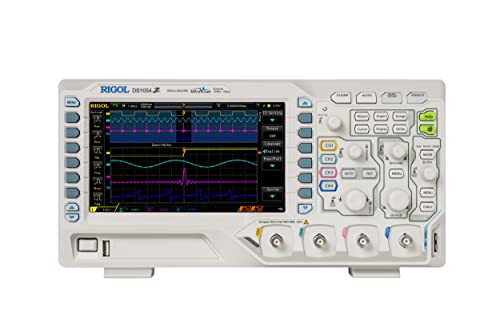
The Rigol DS1054Z is the most recommended hobbyist oscilloscope on the internet, and it has held that position for nearly a decade. Search any electronics forum, Reddit thread, or YouTube comment section asking about a first oscilloscope, and the DS1054Z will be the top answer. At roughly $349, it provides 4 channels, 50MHz bandwidth (hackable to 100MHz), 12Mpt memory depth, and protocol decoding for SPI, I2C, UART, and RS232. No other scope at this price has matched that combination for this long.
The question in 2026 is not whether the DS1054Z is good — it is. The question is whether its proven platform and community support matter more to you than a modern touchscreen workflow. The DHO804 is the natural modern sub-$500 Rigol alternative, while the DHO924S has moved into premium pricing around $899.
This review will be honest about both the DS1054Z's enduring strengths and its increasingly apparent age. If you are choosing between this scope, the DHO804, and the DHO924S, the right choice depends on budget, learning resources, and how much bandwidth you actually need.
◆ Pros & Cons
Pros
- 4 channels for $349 — nearly every competitor at this price is 2-channel, making it the go-to pick when you need clock, data, enable, and ground all visible at once
- 12Mpt memory depth captures long protocol bursts that 1–2Mpt scopes miss — a full UART session at 115200 baud across hundreds of milliseconds stays in buffer without retriggering
- A well-documented firmware procedure unlocks 100MHz bandwidth from the stock 50MHz — the community has published step-by-step guides since 2015 and it takes under 10 minutes
- SPI, I2C, UART, and RS232 protocol decoding included with no upsell — some competitors charge extra license fees for the same decoders
- Ten years of community answers: searching 'DS1054Z + [your problem]' returns solved threads on EEVblog, r/AskElectronics, and YouTube before you finish typing
Cons
- 50MHz stock bandwidth can't cleanly capture SPI clocks above ~10MHz or RF signals — the firmware unlock helps, but it's still a soft ceiling
- Menu navigation is physical-button-only — no touchscreen, no scroll wheel; takes a few sessions to get fluent
- Interface looks dated next to modern touchscreen scopes; not a functional problem, but noticeable
- Anyone doing daily professional bench work should budget for the DHO924S — the touchscreen and 250MHz bandwidth are genuinely worth the extra $550 at that usage level
You'll Also Need
Common accessories that pair well with this scope.
Hantek PP-200 200MHz Probe Set (2x)
Replacement 200MHz passive probes compatible with most bench scopes
Buy on Amazon · $18 →DEVMO USB Logic Analyzer 8-Channel
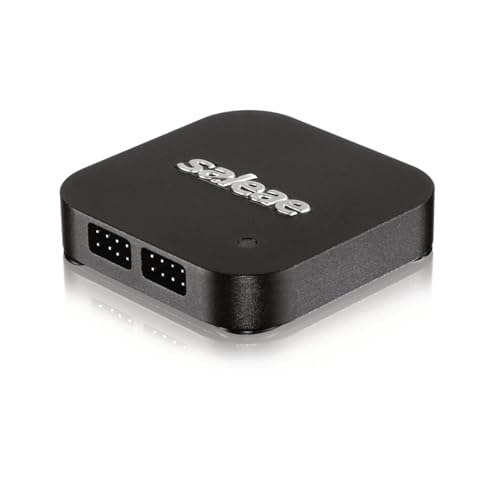
8-channel logic analyzer for debugging digital signals and protocols
Buy on Amazon · $14 →Coaxial BNC Cable 50Ω (3-pack)
BNC to BNC 50Ω coax cables for signal connections
Buy on Amazon · $12 →◆ More Bench Gear We've Reviewed
Beyond the scope: other instruments hobbyists keep on the bench.
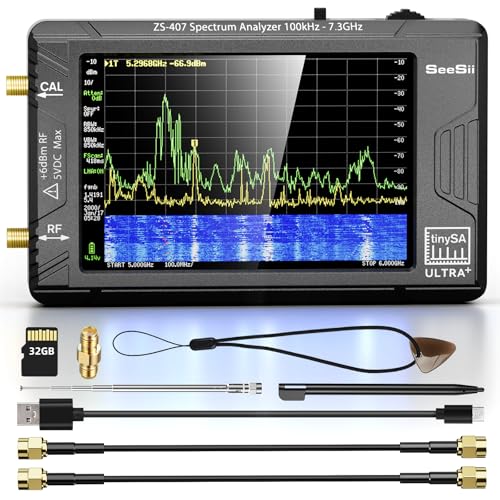
See signals in the frequency domain
TinySA Ultra
$260.9
See all see signals in the frequency domain picks →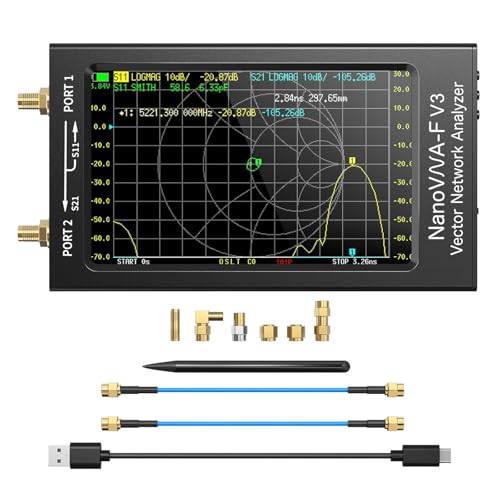
Sweep RF and antenna performance
NanoVNA-F V3
$299.99
See all sweep rf and antenna performance picks →Rigol DS1054Z
Prices may change · Free shipping with Prime
◆ Design & Build Quality
The Rigol DS1054Z is a standard benchtop oscilloscope measuring 313 x 161 x 122mm and weighing 3.2kg. The form factor is conventional: 7-inch TFT display on the left, knobs and buttons on the right, four BNC channel inputs on the front panel, and USB/LAN/trigger ports on the rear. It sits on a bench exactly the way you expect an oscilloscope to sit, and the weight keeps it planted when you are adjusting probes.
Build quality is good for the price range. The plastic enclosure has a solid feel without the flex or creaking you encounter on budget scopes like the FNIRSI 1014D or Hantek DSO5072P. The front panel layout is well-organized with dedicated knob sections for vertical, horizontal, and trigger controls. Each channel has its own clearly labeled buttons and vertical position/scale knobs. The knobs themselves have smooth rotation with perceptible detents — a step above Hantek but a step below what you find on Keysight or Tektronix instruments.
The 7-inch TFT LCD is adequate. It is not an IPS panel (the DHO924S and Siglent SDS2104X Plus use IPS), so viewing angles are limited. Straight on, the display is clear and bright. Off-axis, colors wash out. For normal bench use where you are seated in front of the scope, this is rarely a problem. The display resolution is sufficient for viewing four channels simultaneously with measurement readouts, though it feels dated compared to the crisp IPS displays on newer Rigol and Siglent scopes.
There is no touchscreen. All interaction is through physical buttons and knobs. This is simultaneously a limitation and a strength: the button interface is slower for some tasks (like entering text or navigating deep menus) but faster for others (like adjusting time base and voltage scale, where a dedicated knob is quicker than a touchscreen gesture). Many experienced users prefer knobs for real-time waveform manipulation.
The fan is audible. In a quiet room, you will hear a constant hum from the DS1054Z. It is not loud, but it is present. In a workshop, garage, or shared lab, you will not notice it. In a quiet home office late at night, you will. This is common among benchtop scopes at this price; the DHO924S has a similar issue.
The included probes are decent quality for stock probes. Rigol's standard passive probes are better than what Hantek or FNIRSI includes, with good compensation adjustment and reasonable bandwidth matching. For most hobbyist work, you will not need to upgrade probes immediately.
◆ Performance & Specifications Deep Dive
The DS1054Z ships with 50MHz bandwidth at 1GSa/s across 4 channels, with 12Mpt memory depth. Let us address each specification honestly, including the elephant in the room.
The 50MHz bandwidth is the DS1054Z's most commonly cited limitation and simultaneously the least impactful one, thanks to the bandwidth hack. Rigol sells the DS1054Z, DS1074Z, and DS1104Z on the same hardware platform with different bandwidth limits applied in software. The well-documented hack to unlock 100MHz bandwidth has been available for years, is widely discussed on EEVblog, and involves entering a keycode into the scope's license menu. We are not going to provide instructions here, but a quick search will find them. At 100MHz, the DS1054Z's bandwidth matches most signals a hobbyist will encounter.
Even at the stock 50MHz, the bandwidth handles the vast majority of hobbyist signals. Arduino at 16MHz, ESP32 SPI at typical clock rates, I2C at any standard speed, PWM, audio, and most analog circuits are all well within 50MHz. You hit the bandwidth wall with high-speed SPI (20MHz+), USB signal analysis, or RF work above about 30MHz.
The 4-channel capability is the DS1054Z's headline advantage over similarly-priced 2-channel scopes. Four channels fundamentally changes what you can debug simultaneously. An SPI bus requires at least 3 lines (clock, MOSI, CS), and with 4 channels you can view all three plus a trigger signal or MISO. An I2C bus with an interrupt line uses 3 channels. A motor driver with PWM input, enable signal, and current sense output uses 3 channels. Two-channel scopes force you to constantly reconnect probes and mentally correlate waveforms from separate captures.
The Siglent SDS1202X-E at $379 provides 200MHz bandwidth but only 2 channels. The trade-off between bandwidth and channel count is one of the most important decisions in this price range, and for embedded development work, channels almost always win. You can work around limited bandwidth by understanding your signals' frequency content. You cannot work around limited channels when you need to see how multiple signals relate in time.
The 12Mpt memory depth is excellent for this price range and competitive with scopes costing significantly more. At 1GSa/s, 12 million points give you 12 milliseconds of capture at full sample rate. That is enough for complete serial transactions, multi-step protocol exchanges, and detailed analog events. You can capture a waveform, then zoom in to examine specific portions without re-triggering. The FNIRSI 1014D at $115 provides 240Kpt (50x less). The Hantek DSO5072P provides only 40Kpt and is no longer attractive unless it is deeply discounted. Even the Siglent SDS1202X-E at $379 provides only slightly more at 14Mpt.
The trigger system is where the DS1054Z genuinely punches above its weight class. With Edge, Pulse, Slope, Video, Pattern, Duration, Timeout, Runt, Window, Delay, Setup/Hold, and Nth Edge triggers, the DS1054Z offers a trigger set that rivals scopes at twice the price. Pattern triggering across 4 channels is particularly valuable: you can trigger when specific combinations of digital levels appear simultaneously. Runt triggering catches pulses that do not reach full amplitude. Setup/Hold triggering identifies timing violations in digital circuits. No other scope under $400 matches this trigger capability.
◆ Software & User Experience
The DS1054Z uses a button-and-knob interface that follows standard oscilloscope conventions established by Agilent and Tektronix. The front panel is organized into clearly labeled sections: Vertical controls (per-channel), Horizontal controls, Trigger controls, and function buttons for Menu, Math, Measure, Cursor, and Display. If you have used any professional oscilloscope, the DS1054Z's layout is immediately familiar.
Menu navigation uses soft keys along the right side of the display, with context-sensitive labels that change based on the selected function. The menu structure is deep but logical. Common operations like changing coupling, adjusting bandwidth limit, and setting trigger parameters are accessible within 2-3 button presses. Less common functions like configuring protocol decoders or setting up math operations require navigating through more menu layers.
The interface feels dated in 2026. After using the DHO924S's touchscreen — where you tap to place cursors, pinch to zoom, and swipe to scroll through captures — returning to the DS1054Z's button navigation feels slow and methodical. This is the most tangible difference between the DS1054Z and its modern replacement, and it is the hardest to convey through specifications alone. The touchscreen does not make the DS1054Z incapable; it makes the DHO924S more pleasant.
Automatic measurements are comprehensive. The scope can display up to 5 simultaneous measurements from a list of 37 measurement types including voltage, time, and derived parameters. Measurement statistics (mean, min, max, standard deviation, count) are available for each measurement. This is a genuinely useful feature for characterizing signal behavior over time.
Math functions include addition, subtraction, multiplication, FFT, and digital filtering. The FFT display supports multiple window functions (Rectangle, Hanning, Blackman, Hamming) and provides reasonable frequency-domain analysis for a time-domain oscilloscope. For basic frequency content identification, it works well. For detailed spectral analysis, a dedicated spectrum analyzer is the right tool.
Rigol provides UltraScope software for PC-based control and waveform analysis over USB or LAN. The software allows remote control of the scope, waveform data export, and screenshot capture. The LAN interface also supports SCPI commands for automated test scripts. This remote control capability is useful for automated testing and for analyzing captured data on a larger screen.
The community factor deserves its own mention. The DS1054Z has the largest user community of any hobbyist oscilloscope. EEVblog's extensive tutorials feature it prominently. Reddit's r/AskElectronics recommends it constantly. Rigol's own forums have years of answered questions. YouTube has hundreds of tutorial videos. Whatever question you have about using the DS1054Z, someone has already asked and answered it. This institutional knowledge is a genuine, practical advantage that does not appear on any specification comparison.
◆ Protocol Decoding & Advanced Features
The DS1054Z includes protocol decoding for SPI, I2C, UART, and RS232. These decoders are included at no extra cost — a significant value advantage when you consider that some manufacturers charge additional license fees for protocol decode options.
SPI decoding leverages the 4-channel capability to monitor clock, MOSI, MISO, and chip-select simultaneously. This is a meaningful advantage over 2-channel scopes, which can only view two SPI lines at once. You can see the complete bidirectional data exchange between a microcontroller and a peripheral, with decoded bytes displayed as hexadecimal overlays on the waveform traces. The decode is reliable at standard SPI clock rates up to a few MHz. At higher clock rates, you begin to approach the bandwidth limit, which can affect decode accuracy.
I2C decoding displays start/stop conditions, address bytes (with read/write bit), data bytes, and acknowledge/not-acknowledge status. With 2 channels allocated to SDA and SCL, you still have 2 channels free for monitoring related signals like interrupt lines, power rails, or enable signals. This is one of the practical advantages of 4 channels for embedded debugging.
UART and RS232 decoding display transmitted and received bytes as hexadecimal or ASCII values. You can monitor both TX and RX lines simultaneously with dedicated channels, which is useful for debugging communication problems where requests and responses need to be correlated.
Notably absent from the protocol list are CAN and LIN. These automotive protocols require a paid license on the DS1054Z (and on most Rigol scopes). Siglent includes CAN and LIN decoding for free on the SDS1202X-E and SDS1104X-U. If automotive protocol decoding is a requirement, the Siglent or the DHO924S (which includes CAN/LIN) are better choices.
The trigger system is the DS1054Z's hidden strength. The 12 trigger types provide signal isolation capabilities that no other scope under $400 can match. Pattern triggering is particularly valuable with 4 channels: you can trigger when Channel 1 is high, Channel 2 is low, Channel 3 has a rising edge, and Channel 4 is high — simultaneously. This is invaluable for isolating specific states in digital systems.
Runt triggering captures pulses that cross one threshold but not another, which is essential for diagnosing signal integrity problems. Setup/Hold triggering identifies timing violations in digital circuits relative to a clock edge. Nth Edge triggering captures every Nth occurrence of a trigger event, useful for sampling periodic signals at sub-multiples of their frequency.
Waveform recording and playback is available but limited in the DS1054Z. You can record sequences of triggered waveforms and play them back to identify intermittent events. The recording depth is constrained by the scope's processing power and memory, but for catching rare glitches, it is a useful feature.
Mask testing allows you to define pass/fail boundaries around a reference waveform and count violations. This is useful for production testing and signal quality monitoring. The DS1054Z's mask test implementation is basic compared to dedicated production test equipment, but it is a feature that few scopes at this price include.
◆ Real-World Use Cases
For embedded development, the DS1054Z remains one of the best tools at any price under $500. The 4-channel capability means you can monitor an SPI bus (clock + MOSI + MISO + CS) or an I2C bus (SDA + SCL) with channels left over for monitoring related signals. The protocol decoders turn raw waveforms into readable data. The 12Mpt memory depth captures complete transactions that you can scroll through and analyze. This is the use case the DS1054Z was designed for, and it still excels at it.
For Arduino and microcontroller projects, the scope is more than sufficient. PWM verification, GPIO debugging, interrupt timing analysis, and serial communication monitoring are all well within the scope's capabilities. The community support means that whatever Arduino + oscilloscope question you have, the answer exists somewhere online with screenshots from a DS1054Z.
For power supply design, the DS1054Z provides adequate performance for hobbyist-level work. You can measure switching frequency, output ripple, and load transient response. The 50MHz bandwidth (or 100MHz with the hack) covers most switching frequencies. The 4 channels allow simultaneous monitoring of input, output, switching node, and feedback signals. For professional power supply design requiring high bandwidth and low noise floor, a more expensive scope is warranted.
For audio electronics, the scope's capabilities far exceed what audio work requires. Any audio signal is trivially within bandwidth, and the FFT function provides basic spectrum analysis. The automatic measurements handle frequency, distortion components, and amplitude with ease.
For RF work, the DS1054Z is limited. Even with the 100MHz bandwidth hack, you are constrained to low-frequency RF applications. Crystal oscillator verification, basic filter characterization, and mixer output checking are possible. Anything above about 80MHz signal frequency pushes beyond reliable measurement territory. The Siglent SDS1202X-E at $379 (200MHz) or the Rigol DHO924S around $899 (250MHz) are better choices for RF work.
For education, the DS1054Z has an unmatched advantage: the volume of teaching material created around it. University courses, online tutorials, textbook exercises, and YouTube series have all been built using the DS1054Z as the reference instrument. Learning on a DS1054Z means every example and screenshot you find online matches your instrument exactly.
◆ Who Should Buy This (And Who Shouldn't)
Buy the Rigol DS1054Z if you want the most proven, community-supported hobbyist oscilloscope available. No other scope has a decade of solved problems, answered questions, and tutorials behind it. If you value being able to find the answer to any scope question within minutes of searching, the DS1054Z provides that experience.
Buy it if you need 4 channels at the lowest possible price. At $349, the DS1054Z is the cheapest way to get 4 channels with protocol decoding and deep memory from a reputable brand. The Siglent SDS1104X-U at $419 is the next cheapest 4-channel option with decoding.
Buy it if you are nervous about buying your first oscilloscope and want to minimize the risk of making a bad choice. The DS1054Z is the safe choice — not the best-specced, not the most modern, but the one that thousands of hobbyists have bought and been satisfied with.
Do not buy it if you want a modern touchscreen experience more than community support. The Rigol DHO804 gives you the current DHO interface under $500, while the DHO924S gives you the premium bandwidth tier around $899.
Do not buy it if bandwidth is your primary concern. At 50MHz stock (100MHz hacked), the DS1054Z falls behind the Siglent SDS1202X-E (200MHz, $379) and the DHO924S (250MHz, around $899). For RF work, high-speed SPI, or any signal above about 80MHz, more bandwidth is needed.
Do not buy it if you need CAN/LIN decoding included. The Siglent SDS1104X-U is the lower-cost automotive protocol pick, and the DHO924S covers those protocols in the premium tier.
◆ Alternatives Worth Considering
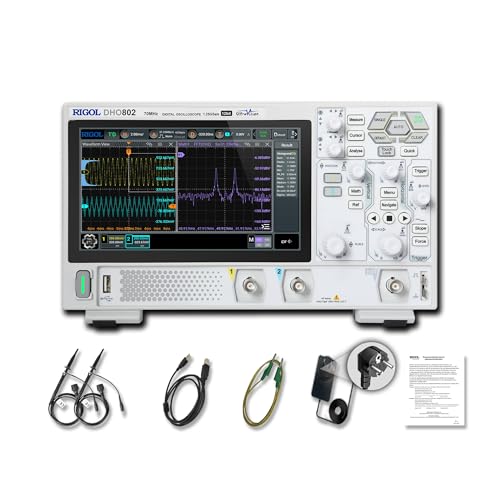
The Rigol DHO804 at $439 is the modern Rigol alternative under $500. It gives you a touchscreen, WiFi, 25Mpt memory, and the current DHO workflow, but it gives up some of the DS1054Z's community depth.
The Rigol DHO924S around $899 is the premium successor in spirit. It provides 250MHz bandwidth, 4 channels, 50Mpt memory, a 7-inch IPS touchscreen, WiFi, a built-in function generator, and CAN/LIN protocol decoding. It is better in every measurable specification, but it is no longer a small price step from the DS1054Z.
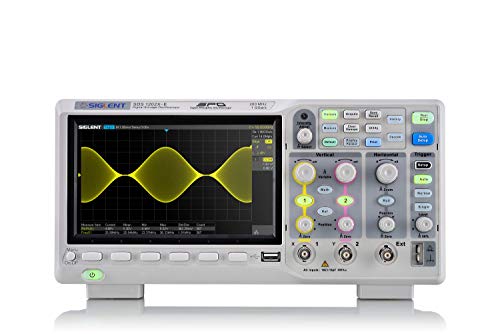
The Siglent SDS1202X-E at $379 offers 200MHz bandwidth with 14Mpt memory and free CAN/LIN decoding — but only 2 channels. If your work rarely requires more than 2 simultaneous signals and you value bandwidth over channel count, the SDS1202X-E is a strong contender.
The Siglent SDS1104X-U at $419 is Siglent's answer to the 4-channel mid-range market. It provides 100MHz, 4 channels, 14Mpt memory, and CAN/LIN decoding. The CAN/LIN inclusion without license fees is its distinguishing feature.
The FNIRSI 1014D at $169.99 is the budget alternative for those who cannot reach $349. It provides 100MHz and 2 channels in a tablet form factor with a touchscreen and function generator. The capability gap is enormous, but the price gap is also enormous.
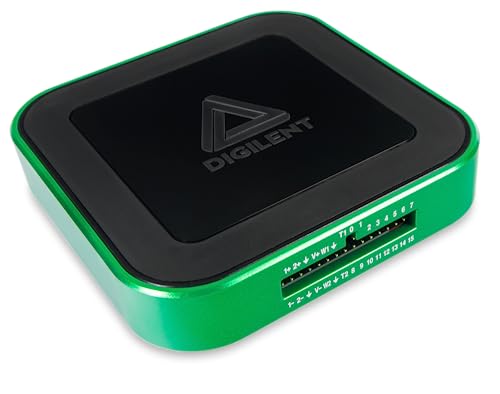
The Digilent Analog Discovery 3 at $379 is not a direct competitor but a complementary tool. Its 16-channel logic analyzer and multi-instrument capability fill gaps that the DS1054Z cannot. Many serious hobbyists own both a DS1054Z for analog work and an Analog Discovery for digital protocol analysis.
◆ DS1054Z vs DHO924S: Should You Upgrade?
The most common question from DS1054Z buyers is whether to spend more on a newer Rigol DHO scope. Here is the honest answer: choose the DHO804 if you want the modern touchscreen workflow under $500, and choose the DHO924S if your budget reaches the premium tier and you need 250MHz bandwidth, 50Mpt memory, a function generator, and CAN/LIN decoding.
The DS1054Z's case rests on three things the spec sheet cannot show: a decade of community knowledge, the lowest 4-channel price available, and proven hardware that has not changed in years. If you are buying your first scope and the community resource depth matters to you — every tutorial, every answered forum question, every YouTube walkthrough using this exact instrument — the DS1054Z provides that experience in a way newer DHO models cannot yet match.
Who should stay with the DS1054Z: buyers with a hard $400 budget ceiling, those who want maximum community documentation for learning, and anyone doing Arduino or embedded work where 4 channels and proven protocol decoding matter more than touchscreen comfort.
Who should upgrade to a DHO model: daily bench users who will appreciate the touchscreen, buyers who want a modern UI, and anyone who knows they need more bandwidth than the DS1054Z can reliably provide.
For a full spec-by-spec breakdown and use-case verdict, see our [dedicated DS1054Z vs DHO924S comparison](/compare/rigol-dho924s-vs-rigol-ds1054z).
Our Verdict
If you're buying your first oscilloscope to learn embedded systems, debug Arduino or ESP32 projects, or study signals at school, buy the DS1054Z — 4 channels, full protocol decoders, and a decade of community support for $349 is a package that still has no real competition at this price. Don't buy it if you do professional bench work daily or need clean capture above 50MHz; for that, the DHO924S at $899 is the right tool. The honest tradeoff: DS1054Z gives you 4 channels and the largest hobbyist knowledge base on the internet; DHO924S gives you 250MHz and a touchscreen for $550 more. For a first scope for a hobbyist, student, or maker, this is the buy.
Rigol DS1054Z
$349
Prices may change · Free shipping with Prime
◆ Full Specifications
| Full Specifications | |
|---|---|
| Bandwidth | 50MHz |
| Sample Rate | 1GSa/s |
| Channels | 4 |
| Memory Depth | 12 Mpts |
| Display Size | 7" |
| Display Type | TFT LCD |
| Form Factor | Benchtop |
| Weight | 3.2kg |
| Dimensions | 313 x 161 x 122 mm |
| Protocol Decoder | SPI, I2C, UART, RS232 |
| Function Generator | No |
| WiFi | No |
| Battery Option | No |
| Trigger Types | Edge, Pulse, Slope, Video, Pattern, Duration, Timeout, Runt, Window, Delay, Setup/Hold, Nth Edge |
◆ Frequently Asked Questions
Should I buy the DS1054Z or the DHO924S in 2026?
Is the bandwidth hack legal and safe?
Do I really need 4 channels?
What protocols can the DS1054Z decode?
How does the 12Mpt memory compare to other scopes?
Is the DS1054Z good for learning?
Can the DS1054Z do FFT analysis?
Does the DS1054Z have a function generator?
◆ Related Buying Guides
Compare With Similar Scopes
◆ Head-to-Head Comparisons
Rigol DS1054Z
$349
Prices may change · Free shipping with Prime