◆ At a Glance
◆ Best For
◆ Overview
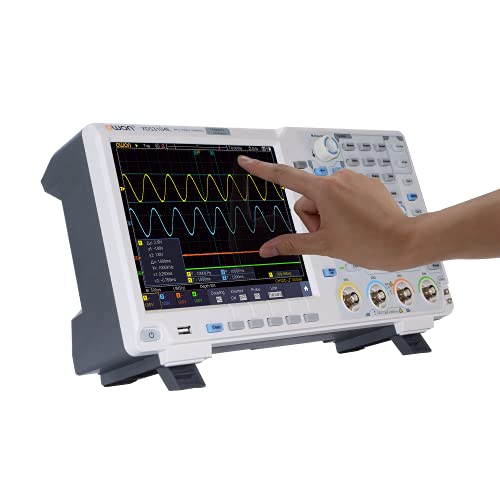
The OWON XDS3064AE occupies a peculiar niche in the hobbyist oscilloscope market. In the mid-$800s, it sits in a price bracket where you'd expect 200MHz bandwidth and cutting-edge features -- but instead, OWON went a different direction entirely. This is a 60MHz, 4-channel benchtop scope with a 14-bit ADC, 40 million points of memory depth, and an 8-inch touchscreen. On paper, that bandwidth number looks like a misprint. In practice, the XDS3064AE is built for a specific kind of work that most hobbyists don't do -- and that's exactly why you need to understand what you're buying before you spend around $850 on it.
The 14-bit ADC is the headline feature, and it's the reason this scope exists. Standard oscilloscopes use 8-bit ADCs, which divide the vertical axis into 256 discrete levels. The XDS3064AE's 14-bit converter provides 16,384 levels -- a 64x improvement in vertical resolution. If you're doing precision analog measurement work, characterizing power supply ripple down to the millivolt level, or analyzing signal integrity where small voltage variations matter, that difference is transformative. If you're debugging Arduino SPI buses and checking PWM duty cycles, you'll never notice.
The 40 Mpt memory depth is the other standout spec. At full sample rate, that buys you significantly longer capture windows than most scopes in this class. Combined with protocol decoding for SPI, I2C, UART, and CAN, plus WiFi connectivity for remote viewing, the XDS3064AE is a capable instrument for extended embedded system monitoring sessions. The question isn't whether it's a good scope -- it's whether it's the right scope for your specific work.
◆ Pros & Cons
Pros
- 40Mpt memory depth is exceptional for long serial transaction capture
- 14-bit ADC resolution — doubles the vertical resolution of standard 8-bit scopes
- 8-inch touchscreen display feels modern and responsive
- 4 channels with protocol decoding including CAN
- Built-in WiFi for remote viewing and data export
Cons
- 60MHz bandwidth is very limiting in the mid-$800s
- The Siglent SDS1104X-U offers 100MHz and CAN/LIN for hundreds less
- OWON software ecosystem is less mature than Rigol or Siglent
- Touchscreen can lag — not as responsive as Rigol's DHO series
- Smaller community means fewer tutorials and troubleshooting resources
You'll Also Need
Common accessories that pair well with this scope.
Hantek PP-200 200MHz Probe Set (2x)
Replacement 200MHz passive probes compatible with most bench scopes
Buy on Amazon · $18 →DEVMO USB Logic Analyzer 8-Channel
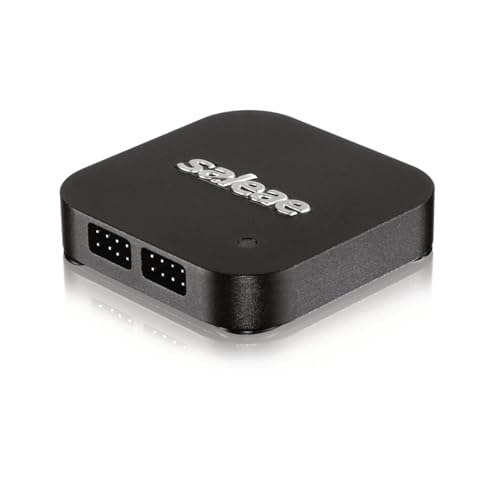
8-channel logic analyzer for debugging digital signals and protocols
Buy on Amazon · $14 →Coaxial BNC Cable 50Ω (3-pack)
BNC to BNC 50Ω coax cables for signal connections
Buy on Amazon · $12 →◆ More Bench Gear We've Reviewed
Beyond the scope: other instruments hobbyists keep on the bench.
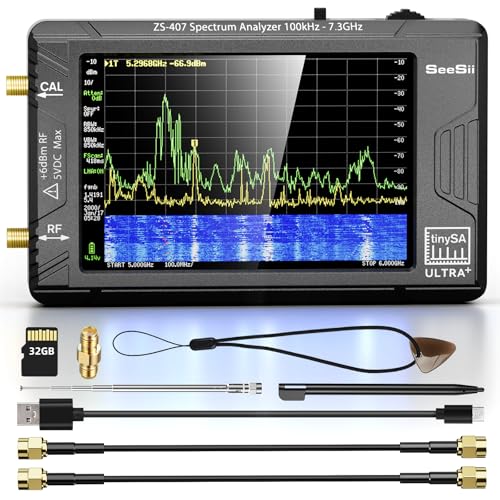
See signals in the frequency domain
TinySA Ultra
$260.9
See all see signals in the frequency domain picks →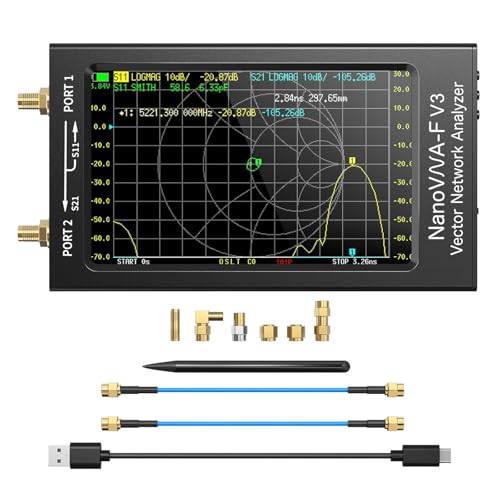
Sweep RF and antenna performance
NanoVNA-F V3
$299.99
See all sweep rf and antenna performance picks →OWON XDS3064AE
Prices may change · Free shipping with Prime
◆ Design & Build Quality
The XDS3064AE is a substantial benchtop instrument at 340 x 180 x 120 mm and 3.5 kg. It feels solid on the bench -- heavier than a Siglent SDS1202X-E but lighter than the Siglent SDS2104X Plus. The 8-inch touchscreen dominates the front panel, and OWON has arranged the hardware controls around it in a layout that's functional if not inspired. Build quality is good but not exceptional -- the plastic housing is sturdy enough, and the BNC connectors feel secure, but you can tell this isn't in the same build-quality tier as Keysight or the Siglent SDS2104X Plus.
The touchscreen itself is responsive for basic operations -- panning, zooming, and menu navigation all work without frustrating delays. However, it can lag during heavy processing, particularly when the scope is working through a deep memory capture with protocol decoding active. This isn't a dealbreaker, but it's noticeable if you've used a Rigol DHO924S, which handles touch interactions more fluidly.
Rear connectivity includes USB for PC connection and data export, plus WiFi for remote viewing. The WiFi implementation works for monitoring waveforms remotely, though it's not something most hobbyists will use regularly. The included probes are adequate -- they'll get the job done, but serious users will want to invest in better probes to actually take advantage of the 14-bit resolution.
◆ Performance & Specifications Deep Dive
Let's address the elephant in the room: 60MHz bandwidth in the mid-$800s is, by any standard comparison metric, low. The Rigol DHO924S delivers 250MHz around $899. The Siglent SDS1204X-E provides 200MHz for $775. If bandwidth is your primary concern, the XDS3064AE is the wrong scope at the wrong price.
But bandwidth isn't the whole story here. The 14-bit ADC fundamentally changes what you can see on the vertical axis. On a standard 8-bit scope at 5V/div, each vertical division is sliced into about 25 discrete levels. On the XDS3064AE at the same scale, you get roughly 1,600 levels per division. When you're looking at a 3.3V power rail and trying to measure 10mV of ripple, the 8-bit scope shows you a noisy staircase. The XDS3064AE shows you the actual waveform shape with meaningful detail.
The 1 GSa/s sample rate across 4 channels is standard for this class. It's adequate for the 60MHz bandwidth -- Nyquist sampling at 60MHz needs only 120 MSa/s, so you have substantial oversampling headroom. The 40 Mpt memory depth is where this scope truly excels. At full sample rate, you can capture 40 milliseconds of continuous data -- enough to capture complete boot sequences, long serial transactions, or intermittent glitches that shorter-memory scopes would miss entirely.
Trigger types include edge, pulse, video, slope, timeout, runt, window, and Nth edge. It's a capable trigger set, though not as comprehensive as what Rigol offers on the DHO924S with its pattern, duration, delay, and setup/hold triggers. For most embedded work, the available triggers are more than sufficient.
◆ Software & User Experience
OWON's software ecosystem is less mature than Rigol's or Siglent's, and you'll notice this in small ways. The on-screen menus are functional but not particularly elegant. The learning curve is moderate -- if you've used any modern touchscreen scope, you'll adapt within an hour. If this is your first scope, expect a slightly steeper learning curve than the Rigol DHO series, which has a more intuitive, smartphone-like interface.
The measurement system provides standard automatic measurements including frequency, period, rise time, fall time, amplitude, RMS, and math functions. FFT analysis is available and works well for frequency-domain work, though the interface for configuring FFT parameters isn't as streamlined as Siglent's implementation.
PC connectivity via USB works reliably for screen captures and data export. The WiFi remote viewing feature is a genuine convenience when you want to monitor a long-running test from another room, though the refresh rate is modest. OWON provides desktop software for deeper analysis, but community resources and third-party tool support lag significantly behind Rigol and Siglent. If you're accustomed to the extensive tutorial ecosystem around the DS1054Z or the active Siglent forums, you'll find the OWON community noticeably thinner.
Firmware updates have been reasonably consistent, though OWON's update cadence is slower than Rigol's recent DHO series updates. The scope works well out of the box, but don't expect the same pace of feature additions and bug fixes that Rigol has been delivering.
◆ Protocol Decoding & Advanced Features
Protocol decoding on the XDS3064AE covers SPI, I2C, UART, and CAN -- a solid set that covers most embedded development needs. The CAN decoding is notable because it's included at no extra cost, unlike Rigol's approach of charging for CAN options on some models. Decoding performance is reliable for standard baud rates and clock speeds, and the 40 Mpt memory depth means you can capture and decode much longer protocol transactions than most competing scopes.
The 14-bit resolution adds genuine value to protocol decoding work in one specific scenario: when you're looking at signal integrity alongside protocol content. On a standard 8-bit scope, you can decode the protocol data but the analog waveform detail is limited. The XDS3064AE lets you examine voltage levels, overshoot, ringing, and noise on your protocol signals with significantly more precision. If you're debugging a marginal I2C bus where voltage levels are borderline, that extra resolution helps you understand why communication is failing.
Math channels support basic operations (add, subtract, multiply, divide) plus FFT. The FFT implementation is adequate for identifying frequency components but won't replace a dedicated spectrum analyzer. Cursor measurements work well with the touchscreen -- you can drag cursors directly on the display, which is more intuitive than button-based cursor placement on non-touch scopes.
The WiFi connectivity enables remote triggering and waveform viewing through OWON's web interface, which is useful for bench setups where the scope isn't within easy reach. It's not a feature most hobbyists will use daily, but it's appreciated when you need it.
◆ Real-World Use Cases
The XDS3064AE excels in a few specific scenarios. Power supply design and characterization is the obvious one -- measuring ripple, noise, and transient response on a power rail demands the kind of vertical resolution that an 8-bit scope simply cannot provide. If you're designing switch-mode power supplies or evaluating LDO regulators, the 14-bit ADC turns measurements that are ambiguous on other scopes into clear, quantifiable data.
Audio electronics is another strong use case. Measuring total harmonic distortion, characterizing amplifier linearity, and analyzing low-level signals in audio circuits benefits enormously from high vertical resolution. The 60MHz bandwidth isn't a limitation here since audio signals top out well below 1 MHz even in high-frequency switching amplifier stages.
Embedded system debugging with long capture requirements is where the 40 Mpt memory shines. If you need to capture an entire boot sequence, monitor a CAN bus for intermittent errors over extended periods, or record a long serial transaction start to finish, the deep memory gives you capture windows that scopes with 12-14 Mpt memory simply can't match.
Where the XDS3064AE struggles is general-purpose hobbyist work. Debugging SPI at 10 MHz clock speeds is fine, but anything above about 20-25 MHz starts to push the useful limits of 60 MHz bandwidth. RF work is essentially off the table. Fast digital signals with sharp edges need more bandwidth than this scope provides. For these applications, you're better served by the DHO924S around $899 or even the Siglent SDS1202X-E at $379.
◆ Who Should Buy This (And Who Shouldn't)
Buy the OWON XDS3064AE if you have a specific, well-defined need for 14-bit vertical resolution. Power supply designers, audio electronics enthusiasts, and signal integrity engineers working at frequencies below 60 MHz will get genuine value from the ADC resolution that no other scope in this price range offers. The deep memory is a strong secondary benefit for extended capture work.
Also consider it if you're doing precision analog measurements where millivolt-level accuracy on the vertical axis matters more than bandwidth. Sensor characterization, analog filter design, and low-frequency precision work all benefit from the 14-bit ADC.
Do not buy this scope for general hobbyist use. Around $850, the value proposition compared to the lower-cost Siglent SDS1104X-U ($419, 100MHz, 4 channels, CAN/LIN) is objectively poor, and the higher-bandwidth Rigol DHO924S around $899 only makes sense if you specifically need its 250MHz tier for typical embedded development and Arduino work. If you're debugging microcontroller projects, working with SPI and I2C buses, or learning electronics, the Siglent will serve you better and leave money in your pocket.
Do not buy this scope if bandwidth matters to your work. 60 MHz is genuinely limiting for any RF work, fast SPI clocks, or digital signal analysis where rise times matter. The bandwidth limitation is the single biggest constraint on this instrument, and no amount of vertical resolution compensates for it.
◆ Alternatives Worth Considering
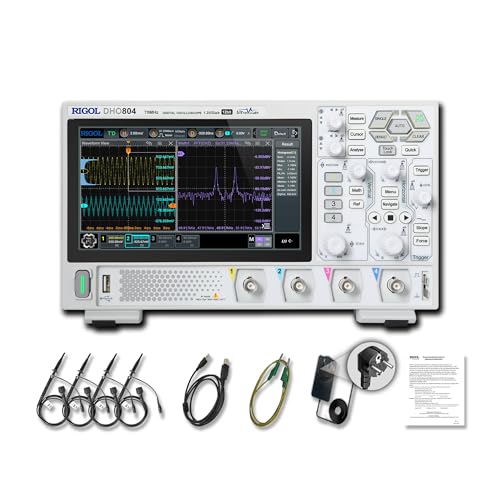
The Rigol DHO924S around $899 is the most obvious alternative and the better choice for the vast majority of hobbyists. It offers 250 MHz bandwidth, a 7-inch IPS touchscreen, 50 Mpt memory, a built-in function generator, WiFi, and CAN/LIN decoding for only about $50 more than the XDS3064AE. Unless you specifically need 14-bit resolution, the DHO924S is the superior instrument for nearly the same money.
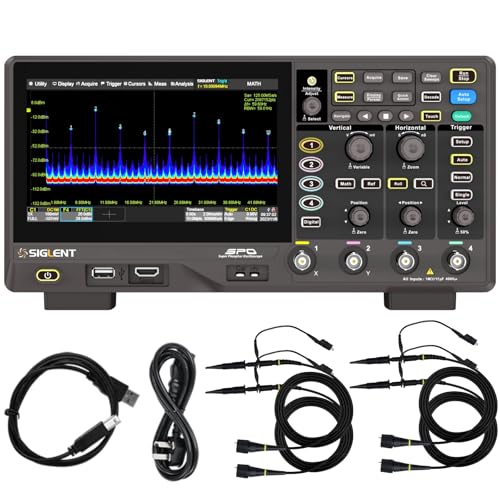
The Siglent SDS1104X-U at $419 is another strong alternative if CAN/LIN decoding is important to your work. It provides 100 MHz bandwidth with 4 channels and includes CAN and LIN decoding without license fees, making it the most cost-effective path to automotive protocol support.
If you're drawn to the XDS3064AE's deep memory but want more bandwidth, consider the Siglent SDS2104X Plus at $1,399. It offers 200 Mpt memory depth (5x the XDS3064AE), 100 MHz bandwidth, a 10.1-inch IPS touchscreen, and comprehensive protocol decoding including FlexRay and I2S. It costs substantially more, but the overall package is significantly more capable.
For users specifically interested in high-resolution ADCs, the trend in 2026 is toward higher-resolution scopes becoming more common. Keep an eye on new releases from Rigol and Siglent, which are both moving toward 12-bit and higher ADC options in their mid-range lines. The XDS3064AE's 14-bit advantage may narrow as the market evolves.
Our Verdict
The OWON XDS3064AE is a niche instrument that earns its place for a specific buyer. In the mid-$800s, the 14-bit ADC is its genuine differentiator — that extra vertical resolution matters for precision analog measurements and signal integrity work where standard 8-bit ADCs fall short. The 40Mpt memory depth is also excellent for capturing very long serial transactions. The problem is 60MHz bandwidth at this price — that's genuinely hard to justify for most hobbyists. The Siglent SDS1104X-U at $419 gives you 100MHz, 4 channels, and CAN/LIN decoding for hundreds less. The XDS3064AE only makes sense if you specifically need 14-bit resolution or very deep memory captures — for general-purpose work, better options exist at this price.
OWON XDS3064AE
$850
Prices may change · Free shipping with Prime
◆ Full Specifications
| Full Specifications | |
|---|---|
| Bandwidth | 60MHz |
| Sample Rate | 1GSa/s |
| Channels | 4 |
| Memory Depth | 40 Mpts |
| Display Size | 8" |
| Display Type | TFT LCD Touchscreen |
| Form Factor | Benchtop |
| Weight | 3.5kg |
| Dimensions | 340 x 180 x 120 mm |
| Protocol Decoder | SPI, I2C, UART, CAN |
| Function Generator | No |
| WiFi | Yes |
| Battery Option | No |
| Trigger Types | Edge, Pulse, Video, Slope, Timeout, Runt, Window, Nth Edge |
◆ Frequently Asked Questions
Is the 14-bit ADC on the XDS3064AE a real advantage over 8-bit scopes?
Why is the bandwidth only 60 MHz at this price point?
How does the 40 Mpt memory depth compare to competitors?
Is the OWON XDS3064AE good for automotive CAN bus work?
How does the WiFi feature work on the XDS3064AE?
Can I use the XDS3064AE for RF work?
Should I buy the XDS3064AE over the Rigol DHO924S?
◆ Related Buying Guides
Compare With Similar Scopes
◆ Head-to-Head Comparisons
OWON XDS3064AE
$850
Prices may change · Free shipping with Prime